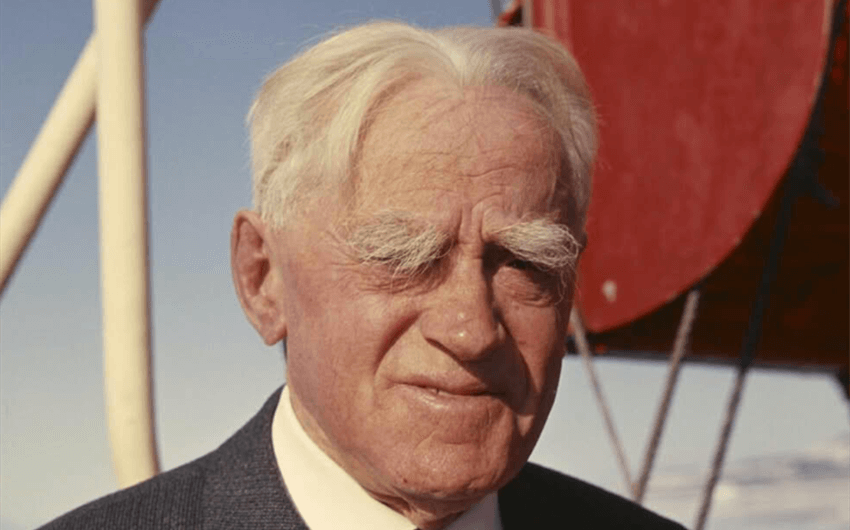
Ejnar Mikkelsen Wife: Naja Holm and Ella Holm-Jensen in His Life Story
If you’re searching for Ejnar Mikkelsen’s wife, you’re really looking for the personal chapters behind a life usually told through ice, maps, and survival. Ejnar Mikkelsen married twice, and both marriages were shaped by the same truth that shaped his expeditions: his life was rarely ordinary. His wives were Naja Marie Heiberg Holm Mikkelsen (his first wife) and, after her death, Ella Holm-Jensen Mikkelsen (his second wife).
Why Ejnar Mikkelsen’s marriages get overlooked
Ejnar Mikkelsen is remembered as a Danish polar explorer and writer, a man whose name is attached to Greenland, brutal endurance, and the kind of decisions that look almost unreal from the comfort of modern life. When a person’s public identity is dominated by an epic survival story, everything else can shrink in the retelling—especially family life.
But the truth is that marriages don’t sit quietly in the background. They absorb the long absences, the danger, the financial uncertainty, and the emotional whiplash that comes with exploration. When someone is away for months or years, when the outcome is never guaranteed, a spouse doesn’t just “wait.” A spouse lives inside a constant question mark.
So understanding who Ejnar Mikkelsen married isn’t about trivia. It’s about seeing the person as more than a heroic silhouette on the horizon.
Ejnar Mikkelsen’s first wife: Naja Marie Heiberg Holm
Ejnar Mikkelsen’s first wife was Naja Marie Heiberg Holm, often referred to in full as Naja Marie Heiberg Holm Mikkelsen after marriage. Their marriage is generally placed in 1913, which matters because it sits close to one of the most punishing stretches of his life: the aftermath of his Alabama Expedition ordeal in Greenland (1909–1912), when he and Iver Iversen survived extreme isolation and hardship.
That timing gives the relationship a particular emotional texture. It suggests that marriage came after a period of survival that likely changed him, physically and mentally. People who come back from prolonged trauma rarely return as the exact person who left. They return older on the inside. They return with new silences, new habits, and sometimes a fierce need to keep moving because stillness feels too loud.
Naja was also connected to a world that would have understood the Arctic pull more than most. She was the daughter of Gustav Holm, a Danish naval officer and Arctic explorer. In a strange way, this makes their pairing feel less random: she wasn’t marrying a man with an odd hobby; she was marrying someone whose risk-taking had a cultural and professional context.
What their marriage likely looked like in practical terms
Even without daily diaries laid out for modern readers, you can imagine the practical realities of a marriage to a man like Ejnar Mikkelsen:
- Long periods of separation due to travel and official work
- A household shaped by public attention, honors, and institutional responsibilities
- Financial unpredictability, especially in years when exploration and writing didn’t guarantee steady income
- An emotional life influenced by the risk and intensity of polar work
This is the part most biographies skip: a marriage isn’t just romance. It’s logistics. It’s stamina. It’s deciding what you can live with and what you can’t.
Children and family with Naja
Public genealogical summaries often attribute two children to Ejnar and Naja: a daughter named Else and a son named Aksel. Whether you’re interested in the names specifically or not, the larger point matters: this wasn’t a brief, childless marriage that existed only as a footnote. It was a real family chapter.
And then it ended abruptly, not through divorce or scandal, but through loss.
Naja’s early death and what it changed
Naja Marie Heiberg Holm Mikkelsen died in 1918, still young. When a spouse dies early, the surviving partner’s life is split into “before” and “after,” even if everything else outwardly continues. The emotional geography changes. The home changes. The meaning of future plans changes. And when the surviving spouse is already a person accustomed to danger and mortality, grief can take on a complicated form—less theatrical, more internal, sometimes wrapped tightly in duty.
For Ejnar Mikkelsen, this loss came during a period when the world itself was unstable. The early 20th century offered very little softness. If you were grieving, you often still had to keep functioning as if grief were a private inconvenience.
Ejnar Mikkelsen’s second wife: Ella Holm-Jensen
After Naja’s death, Ejnar Mikkelsen married again. His second wife was Ella Holm-Jensen, commonly referred to after marriage as Ella Mikkelsen. Many summaries place this second marriage around 1919, soon after he became a widower.
People sometimes react strongly to remarriage soon after a loss, especially from a modern perspective that treats grief like a long, carefully curated process. But earlier generations often approached remarriage differently, particularly when children were involved or when household stability mattered. Practical considerations and emotional considerations weren’t separate—they were intertwined.
Ella is frequently described as bringing a blended-family reality into Ejnar’s life. She had a son, Sven Havsteen-Mikkelsen, who later became a noted painter, and Ejnar is often described as having adopted him. That detail is meaningful because it shows the marriage wasn’t only companionship for Ejnar; it expanded the family structure and created a new kind of fatherhood role in his home.
The name details that confuse readers
If you’ve tried to research Ella, you may have noticed conflicting details about her birth and death years in different places. That’s common for historical figures whose records are scattered across archives, biographies, and secondary summaries. The most dependable thing to hold onto is not a single digit in a year, but the consistent core: she was Ejnar’s second wife, their marriage began after Naja’s death, and she is strongly associated with the Havsteen-Mikkelsen family connection through her son.
When you see discrepancies, it’s usually a reminder that history is sometimes assembled from imperfect paperwork. The marriage itself is the stable fact; the fine print is where sources can drift.
What it meant to be married to a polar explorer
It’s easy to romanticize the “explorer’s wife” as a figure in a doorway, staring into the distance, waiting for a ship that may never return. That image is dramatic, but it’s also incomplete. In real life, being married to someone like Ejnar Mikkelsen likely required a very specific kind of strength:
- Emotional self-sufficiency: you cannot rely on someone who is often physically absent to meet every daily need.
- Public resilience: when your spouse is admired, criticized, or mythologized, you live in the shadow of narratives you didn’t create.
- Comfort with uncertainty: expeditions don’t run on reliable schedules, and danger is never theoretical.
- Household leadership: the spouse at home often becomes the true manager of practical life.
Both Naja and Ella, in different ways, would have had to live with the fact that Ejnar’s work was not simply a job. It was a calling that could override comfort.
How his marriages fit into his larger life arc
Ejnar Mikkelsen’s story is often told through the lens of Greenland, survival, and later administrative roles connected to the Arctic. But marriages are part of the same arc. A person doesn’t return from extreme experiences and then live in a vacuum. They return to kitchens, conversations, ordinary mornings, and the intimate reality of being known by one person more closely than the public ever could.
With Naja, the marriage sits close to the period when his survival story was still fresh, when the world was still deciding what kind of man he was: reckless adventurer, scientific hero, national figure, or something more complicated. With Ella, the marriage fits into a longer season of legacy-building and family continuity, including the blended-family dimension that adoption can create.
In other words, his wives weren’t decorative figures in his biography. They were part of the infrastructure that allowed a life like his to exist at all.
Quick, grounded summary
- Ejnar Mikkelsen’s first wife was Naja Marie Heiberg Holm, whom he married in 1913.
- Naja died in 1918.
- He later married Ella Holm-Jensen, commonly described as his second wife, with their marriage often placed around 1919.
- Ella had a son, Sven Havsteen-Mikkelsen, whom Ejnar is often said to have adopted.
Final thoughts
When you zoom in on “Ejnar Mikkelsen’s wife,” you find a story that’s quieter than an expedition log but just as revealing. Naja represents a marriage connected to exploration heritage and a family built under the shadow of Arctic risk. Ella represents a second chapter—one that blended families and carried his home life forward after loss. Together, these marriages show that even the most mythic public figures still lived private lives shaped by love, responsibility, grief, and the everyday work of keeping a household together while the world watched from a distance.
image source: https://lex.dk/Ejnar_Mikkelsen