Edgar Allan Poe’s Wife Virginia Clemm: Marriage, Age Gap, Life, and Legacy
Edgar Allan Poe’s wife was Virginia Eliza Clemm, often remembered for two facts: she was his first cousin, and she was very young when they married. That headline can overshadow everything else—her real life, her years of illness, and how deeply her story is woven into Poe’s work. Here’s what’s historically documented, what’s often misunderstood, and why Virginia’s legacy still follows Poe’s name today.
Who was Edgar Allan Poe’s wife?
Edgar Allan Poe married Virginia Eliza Clemm (1822–1847), known after marriage as Virginia Poe. She grew up in a financially precarious household, and her life became closely tied to Poe’s during his early adult years, when he was struggling to establish himself as a writer and editor.
Virginia is often described as gentle, musical, and devoted to her family. She lived in the same household as Poe for years, alongside her mother, Maria Clemm—who became an essential support figure in Poe’s daily life. When people talk about Poe and Virginia, they’re really talking about an entire small, fragile family unit trying to survive on inconsistent literary income.
When did Poe and Virginia Clemm get married?
The couple’s marriage is typically dated to May 16, 1836, when they held a public wedding ceremony in Richmond, Virginia. There is also documentation showing a marriage license application in September 1835, which is one reason you sometimes see multiple dates referenced in different summaries.
In plain terms: paperwork and public ceremony didn’t line up neatly, which was not uncommon in that era. When you see contradictory timelines online, it’s often because one source is pointing to the license date while another is pointing to the wedding ceremony.
How old was Virginia Clemm when she married Edgar Allan Poe?
Virginia was 13 at the time of the marriage ceremony, and Poe was 27. That age gap is the part most people react to first, and it’s also the part that requires the most care when discussing it.
In the 1830s, social norms around adolescence and marriage were different than they are today, but that doesn’t make the situation simple or comfortable. It’s still striking, and historians and biographers continue debating what the relationship was like in private. Some describe their bond as affectionate and deeply loyal; others argue that it may have been more companionate in nature for at least part of the marriage. What is safe to say is that the marriage was real, publicly recognized, and central to Poe’s home life.
Why did they marry, and what was their household like?
To understand the marriage, you have to understand the household situation Poe entered. Poe moved in with Virginia’s family earlier in the 1830s when he was in a difficult financial position. Maria Clemm, Virginia’s mother, became a stabilizing force—handling practical matters, supporting Poe, and holding the household together during frequent moves and money stress.
Their living situation wasn’t glamorous. Poe’s income rose and fell depending on editorial work and writing, which meant constant pressure. This is one reason Virginia’s story matters: she wasn’t a distant figure in Poe’s life. She was present through the daily grind of survival—rent, food, illness, and the emotional strain of insecurity.
Virginia also wasn’t simply “Poe’s muse.” She was a young person living inside an adult crisis—poverty, relocation, and later a devastating illness that lasted years. The marriage, the household, and the struggle all blended together.
Virginia Clemm’s illness and the long decline
Virginia’s health began to collapse in the early 1840s. In 1842, she experienced a serious episode that is widely described as the beginning of her long battle with tuberculosis. What followed was not a quick tragedy, but a slow, exhausting decline over roughly five years.
Tuberculosis in the nineteenth century was terrifyingly common and often fatal. It also came with a cruel rhythm: periods of improvement that gave hope, followed by setbacks that stole it back. That pattern can break a family emotionally and financially, and it shaped Poe’s life during years when he was already vulnerable.
Virginia’s illness is also central to how people read Poe’s work. You can argue about interpretation, but it’s difficult to ignore how themes of fragile beauty, loss, and lingering grief intensify during the years she was sick. When readers say Poe wrote like someone haunted, Virginia’s illness is one of the real-life hauntings behind that tone.
When and how did Virginia Clemm Poe die?
Virginia died on January 30, 1847, at age 24, from tuberculosis. She died in the family’s home in Fordham (in what is now the Bronx, New York). In her final period, Poe and her mother were both closely involved in her care, and accounts from the time describe a household consumed by illness and grief.
Her death did not simply “sadden” Poe. It destabilized him. Friends and later biographers frequently describe him as profoundly affected, with increased emotional volatility afterward. While Poe’s life had always contained hardship, Virginia’s death is often treated as one of the most decisive personal losses he ever endured.
Was their marriage happy? What historians disagree about
This is where the story gets complicated, because we are dealing with limited evidence, cultural distance, and decades of mythology. Biographers disagree on the nature of the marriage partly because affectionate letters and anecdotes can be read more than one way, and partly because people bring their own assumptions to a relationship that doesn’t fit modern expectations.
Here are the few grounded points that tend to show up consistently across serious discussions:
They were close. Whether you interpret their bond as romantic, companionate, or evolving over time, they lived as a family unit with Virginia’s mother and were emotionally intertwined.
They were devoted during illness. The years of care, stress, and grief are repeatedly described as intensely personal and consuming.
We can’t reduce the relationship to a single label. A marriage can contain loyalty, tenderness, dependence, and complexity all at once—especially under the pressures of poverty and chronic illness.
If you want the most responsible conclusion, it’s this: they were married, they shared a household that functioned as a tight family, and Virginia’s illness and death profoundly shaped Poe’s life.
How Virginia Clemm influenced Poe’s writing and legacy
People often want a neat line that says, “Virginia inspired this poem.” Real life doesn’t work that cleanly. But Virginia’s presence and absence helped shape the emotional environment Poe wrote from. Her illness meant years of fear and anticipatory grief—watching someone fade while still alive. Her death meant the kind of final loss Poe returned to again and again in theme and tone.
It’s also important to recognize that Virginia’s legacy is not only “influence.” She became a symbol—sometimes unfairly—of innocence, tragedy, and the doomed beloved figure that gets projected onto Poe’s art. That projection can erase her humanity. Virginia was not just a poetic idea. She was a young woman who lived a short life in unstable conditions, and she endured a long illness in a time when medicine could offer little.
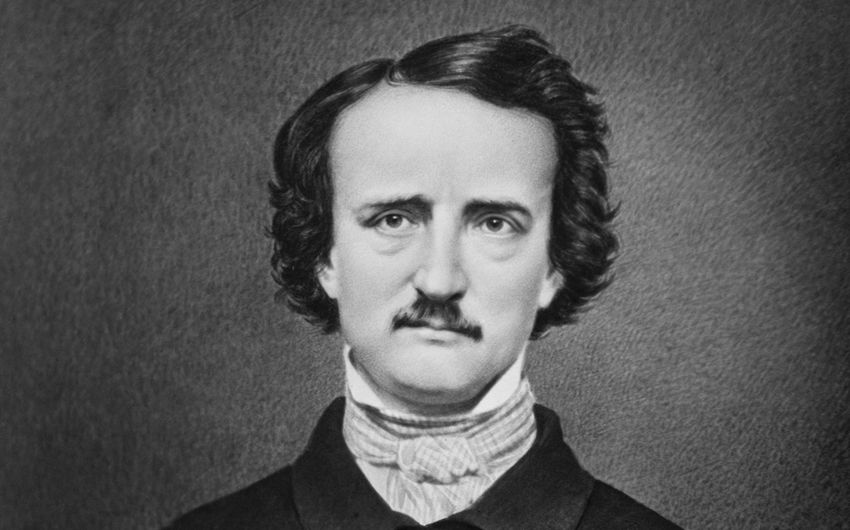
Featured Image Source: https://www.poetryfoundation.org/poets/edgar-allan-poe